30 Jul 2026
SEBI Registered Name - Kotak Mahindra Mutual Fund
SEBI Registered Number - MF/038/98/1
A fan books a flight. Another reserves a hotel room. A restaurant prepares for a surge in customers. A cab driver expects higher earnings for the weekend. Long before the music begins, the concert has already set an entire city in motion.
For years, concerts were measured by sold out arenas, chart-topping artists and roaring crowds. What began as a musical performance often ended as an economic phenomenon. Today, they have evolved into powerful economic engines capable of driving tourism, boosting local businesses, creating jobs, and generating substantial revenue for entire cities. Around the world, the rise of the "Concert Economy" is reshaping how governments, businesses, and investors think about live entertainment.
Global Concert Economy: Beats to Billions
The shift from stage presence to global contributors is the concert economy. The global concert industry has evolved far beyond ticket sales. Around the world events like Coachella, K-pop tours, and live performances can generate millions of dollars in visitors spending while putting destinations firmly on global map.
One of the biggest examples of this would be Coachella music festival held in the US every spring. What begins as a music festival ends up with people travelling from across the world to be a part of the spring gathering. Coachella attracts over 125,000 attendees per day, sparking spending that reaches far beyond the venue.
Source: Goldman Sachs report dated May 03, 2024
The industry has transformed from an album-driven industry to an experience-driven business. K-Pop concerts achieve 96% venue occupancy versus 86% for the broader concert market, while fans pay about 27% higher ticket prices ($132 vs. $104).
Source: Corporate Reports, Bloomberg, Berstein estimates and analysis
Lollapalooza's success across multiple countries highlights the growing global demand for live experiences. Supporting this trend, Bloomberg Intelligence expects Live Nation's. concert revenue to grow ~10% in 2026, driven by strong attendance and international expansion, demonstrating the scalability of premium music festivals worldwide. Live Nation Entertainment is, an American global entertainment company. It is the world’s largest live event promoter and operates in more than 40 countries, managing ticket sales through its subsidiary, Ticketmaster.
Globally, the live entertainment market is projected to grow from approximately US$202.9 billion in 2025 to US$270.3 billion by 2030, reflecting a CAGR of ~5.9%. No longer just a stop on the global touring circuit, India is emerging as a marquee destination for international performers, with major concerts drawing anywhere from 60,000 to over 2.2 lakh attendees, underscoring the scale of the country's evolving concert culture.
Source: Market and market report dated July 2025. India times, EY report dated 30th April 2025.
The Rise of India’s Concert Culture:
Increase in per capita income drives consumption.
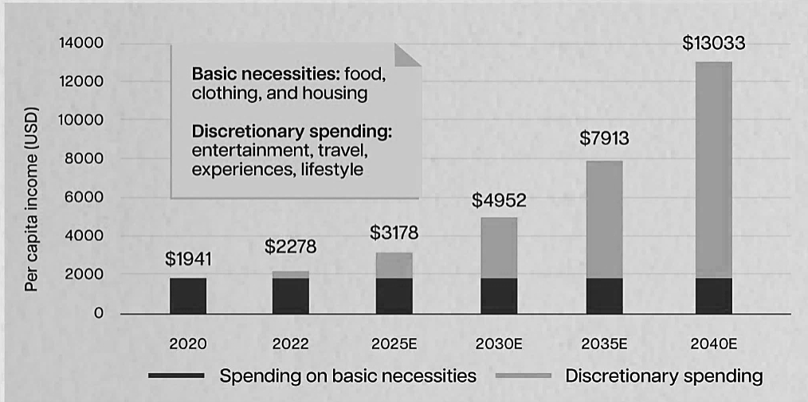
Source: PWC Research| World Bank Data | Ministry of Statistics and Programme Implementation, GOI| Financial Benchmark India Pvt Ltd.| FortuneIndia.com| Dezerv report dated 23rd Jan 2026
For years, India was largely considered a stop on the global touring circuit. Today, it is fast emerging as a destination in its own right. Rising young population, disposable income, expanding ticketing platforms and a growing appetite for live experiences have transformed the country into the world’s promising concert markets. More than 70% of Gen Z and millennials attended at least one ticketed live event in the past year, reflecting a structural shift in consumer behaviour.
India’s live events market is already large and fast-growing, around ₹20,861 crore, expanding at 15% year-on-year, well above the global average. Ticketed music alone added over ₹13 billion, making one thing clear: experiences sell.
Coldplay’s Music of the Spheres tour underscored the economic potential of India’s concert industry, generating an estimated ₹641 crore economic impact, including a ₹392 crore boost to local economies and ₹72 crore in GST revenues. The shows attracted over 2.2 lakh attendees, with 86% travelling from outside the host cities, driving significant demand for tourism and hospitality. During the event, hotels charged up to ₹90,000 per night, cab bookings surged over 400%, restaurant footfalls rose 40%, and airports handled ~1.38 lakh passengers in just three days, highlighting the far-reaching economic spillover of large-scale live events.
Source: EY Report and Avalon Consulted Report dated Feb 2026.
The growth story is not limited to international artists. Indian performers are demonstrating similar drawing power. Dil-Luminati Tour generated an estimated ~₹943 crore economic impact across 14 cities, supported by ~3.2 lakh attendees, strong ticket sales and significant spending on travel, accommodation, dining, shopping, and local experiences. This highlights the ability of homegrown artists to create nationwide demand while benefiting multiple sectors beyond live entertainment.
Source: EY Report dated December 2025
More Than Music. A New Economic Engine
India’s live events industry is on a strong growth trajectory, with the market projected to surpass ₹14,000 crore by 2026, supported by rising incomes and growing demand for experience-led spending. Globally, the momentum is equally strong, with the live music industry expected to generate nearly $38 billion in revenue by 2030, making it one of the fastest-growing segments of the entertainment sector.
Source: dezerv
India's New Generation of Experience Seekers
| Insights | Data |
|---|---|
| Age Group | 18–34 |
| Digital Access | 564 million |
| % Who Attended Ticketed Events | ~70% (Tier 1) |
| Average Spend – GA | INR 1,000–INR 3,500 |
| Average Spend – VIP | INR 7,000–INR 25,000+ |
| Booking Behaviour | 3–4 weeks in advance |
| Event Tourists | 20–30% cross-state attendees |
What Drives Concert Revenues?
Concerts have become powerful engagement platforms for brands, helping create lasting consumer connections rather than just visibility. Reflecting this shift, several brands have partnered with leading international music acts in recent years and has reported meaningful upticks in customer engagement from such associations. Across the industry, ticket sales and sponsorships remain the largest revenue streams, contributing nearly 80% of total concert revenues.
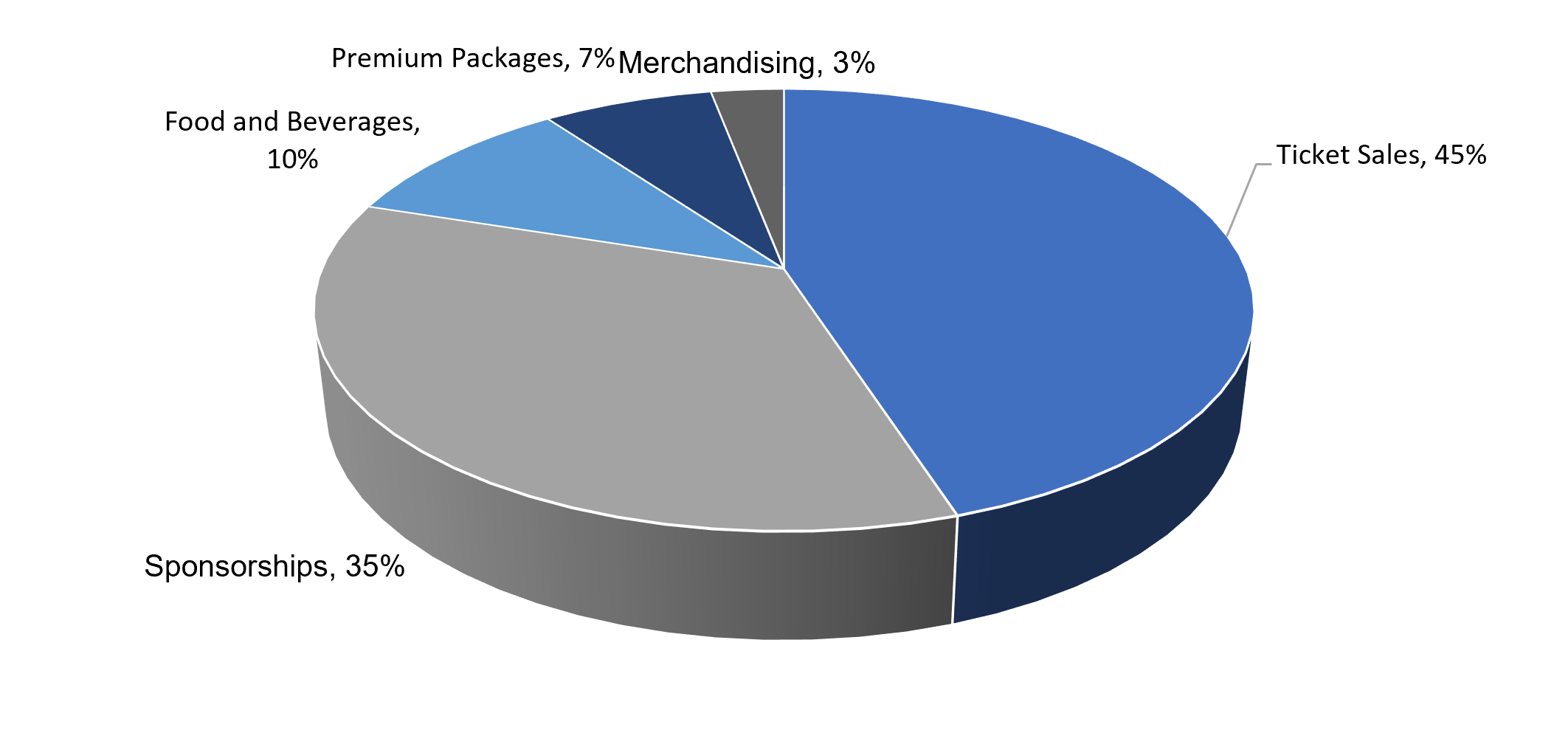
Source: Avalon Consulting report dated 13th February 2026.
A Cultural Shift Also, Not Just an Economic One
The concert boom is not just being fuelled by rising incomes, but by changing aspirations. A new generation of consumers is choosing experiences over possessions, valuing memorable moments and shared experiences as much as traditional markers of wealth.
This shift has gained momentum in the post-COVID era, as live events have become an important part of social and cultural engagement. Digital ticketing platforms such as BookMyShow and Zomato's District have further amplified participation by making event discovery, booking, and premium experiences more accessible than ever before.
Technology Platforms Are Betting on Live Events:
Technology has reshaped live entertainment, with digital ticketing, cashless payments, and dynamic pricing enhancing the audience experience. The industry has also become increasingly ticket-driven, with ticket sales now contributing 50–70% of revenues, up from 10–30% before 2020.
Source: Bloomberg Report dated 19th March 2026| As per latest data available
Upcoming Momentum in 2026:
India’s concert scene shows no signs of slowing down in 2026, with a packed calendar of internationally acclaimed artists and genre-defining acts set to perform across Mumbai, Delhi NCR, Bengaluru, Goa, Hyderabad, Pune, and Chennai. From high-energy EDM spectacles to unique live performances by global artists the year is shaping up to be one of the strongest yet for live music in the country. These concerts are expected to draw tens of thousands of fans, with several large-format arena and festival-style events likely attracting crowds of over 10,000 to 20,000 attendees each, further cementing India’s reputation as a key destination on the global touring circuit and a rapidly growing hub for live entertainment.
Source: Economic Times
Challenges on the Road Ahead
India’s concert industry still faces structural hurdles, including a shortage of large-scale venues, high event costs, regulatory complexities, crowd management challenges, and weather-related disruptions. The infrastructure gap is particularly evident outside major metros, with fewer than ten venues nationwide capable of hosting 10,000+ attendees.
The challenge is even more pronounced beyond major metropolitan areas, where Tier 2 and Tier 3 cities often lack dedicated event facilities and must rely on temporary locations such as college campuses, open grounds, and public spaces to host large events.
Addressing these challenges through better infrastructure, technology adoption, and policy support will be crucial for sustaining the long-term growth of India's live entertainment ecosystem.
Mr. Arjun Khanna, Fund Manager & Senior VP- Equity Research at Kotak Mahindra AMC adds, “India’s concert economy is no longer a niche entertainment trend; it is becoming a meaningful consumption theme that sits at the intersection of rising discretionary income, youth-led experience spending, tourism, hospitality, digital ticketing and brand engagement. For investors, the real opportunity is not just in sold-out stadiums, but in the broader ecosystem they activate — travel, hotels, food services, payments, platforms, sponsorships and urban infrastructure.”
The next time a stadium fills with cheering fans, the real story may not just be the artist on stage. It may be the hotel worker, the local entrepreneur, the cab driver, the event technician, and the city itself, all benefiting from an industry that is proving to be far more than just entertainment.
KMAMC is not guaranteeing/offering/communicating any indicative yield/returns on investments. The stocks/sectors mentioned in this slide do not constitute any recommendation and Kotak Mahindra Mutual Fund may or may not have any future position in these sectors/stocks.
Usage of brand names/ company names in generic content/non-scheme related content - Use of the company/ brand names does not imply any affiliation with or endorsement by them or any of its holding companies, subsidiaries or affiliates and are used for illustrative purpose only.
These materials are not intended for distribution to or use by any person in any jurisdiction where such distribution would be contrary to local law or regulation. The distribution of this document in certain jurisdictions may be restricted or totally prohibited and accordingly, persons who come into possession of this document are required to inform themselves about, and to observe, any such restrictions
MUTUAL FUND INVESTMENTS ARE SUBJECT TO MARKET RISKS, READ ALL SCHEME RELATED DOCUMENTS CAREFULLY.